


The Sesquicentenary and the Scottish Enlightenment
Ian Jack, Senior Fellow and Archivist
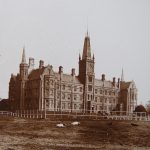
During the 150 years between the middle of Queen Victoria’s reign and the start of the Trump presidency, St Andrew’s College has amply fulfilled the aspirations of the 1462 men and women, mostly of Scottish origin, who paid for the grand buildings to be erected in the 1870s. These founders, imbued with the Scottish commitment to widespread education, successfully created an institution providing a home from home for deserving students.
Resident collegiate life, enjoyed by eight young men in 1876, is now embraced by some 260 male and female undergraduates and a dozen graduate students. The recent statement of the College mission is a modern version of the high principles, born of the Scottish Enlightenment, which informed the Victorian institution under Principal Kinross. From the beginning, the students have been assisted throughout their journey towards adulthood by staff, tutors and peers, so that, along with the intellectual challenges of a great university, the changing demands of social and cultural life can be realised.
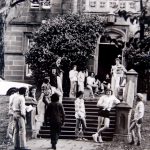
Sport and music, drama and debating, have been safety valves for teenage life for a century and a half. For 120 years involvement in self-government, through the Students’ Club, has offered a rich education for the future. As student numbers have grown, the creation of specialised clubs and informal groups has also accelerated, while the natural rivalry among the Colleges has given a friendly edge to sporting encounters, through the Rawson Cup and the Rose Bowl, and in recent years to cultural contests for the Palladian Cup.
The need for scholarships and bursaries to allow the needy and gifted to come to College and to University has been recognised since the very beginning in the 1860s. A significant percentage of students has been enabled to attend through the generosity of a few major donors, such as Janet Coutts, and a host of smaller donations. Nowadays, there is also an emphasis on encouraging more senior students to continue their residency into a third or a fourth year, and the role of mentors, deans and sub-deans has become defined and extended under a Director of College Life. The pastoral care exercised in an exemplary fashion by Principal Kinross in the nineteenth century is no less evident today but is, in the spirit of the times, both more systematised and more diffuse.
On the cusp of its sesquicentenary, Andrew’s, while remaining intensely aware of its history and its real traditions, has worked hard to translate into modern terms the values which encouraged so many folk to support its initial creation. The challenge, cheerfully accepted by College, is to maintain this momentum up to the bicentenary and beyond.
Both comments and pings are currently closed.